线性表 线性表是最基础的数据结构,它是一种线性结构,即数据元素之间是一对一的关系,线性表一般需要包含以下功初始化线性表: 将一个线性表进行初始化,得到一个全新的线性表。获取指定位置上的元素: 直接获取线性表指定位置i上的元素。检查线性表是否为空表: 检查线性表是否为空表。获取元素的位置: 获取某个元素在线性表上的位置i。插入元素: 在指定位置i上插入一个元素。删除元素: 删除指定位置i上的一个元素。获取长度: 返回线性表的长度。 顺序表 顺序表是利用数组实现的,采用顺序存储结构的线性表
初始化顺序表 1.首先定义一个结构体类型,将可能用到的数据保存在一起,以int类型为例
1
2
3
4
5
6
7
typedef int E; struct List { E array [10 ]; int capacity; int size; };
1 2 typedef struct List * ArrayList ;
1 2 3 4 5 void initList (ArrayList list ) { list ->capacity = 10 ; list ->size = 0 ; }
4.在刚才的初始化函数中,我们简单的将数组容量设为10,但线性表容量的设置应该根据实际情况来定,这里我们使用动态扩容,直接用一个指针来指向底层数组的内存区域,当装不下时,创建一个更大的内存空间来存放数据,以此来实现动态扩容。同时创建更大的内存空间也有失败的可能,所以此处应当返回一个结果告诉调用者是否扩容成功,修改前面的代码:
1
2
3
4
5
struct List { E * array ; int capacity; int size; };
1
2
3
4
5
6
7
8
_Bool initList (ArrayList list ) { list ->array = malloc (sizeof (E) * 10 ); if (list ->array == NULL ) return 0 ; list ->capacity = 10 ; list ->size = 0 ; return 1 ; }
实现插入操作 1 2 3 4 5 void insertList (ArrayList list , E element, int index) {}
按照先前的思路编写代码先不断循环找到要插入的位置 找到后,将要插入位置以后的元素全部向后移动一位 移动后空出一位,将新元素插入 成功插入后,更新长度 1 2 3 4 5 6 7 8 9 void insertList (ArrayList list , E element, int index) { for (int i = list ->size; i > index - 1 ; i--){ list ->array [i] = list ->array [i - 1 ]; } list ->array [index - 1 ] = element; list ->size++; }
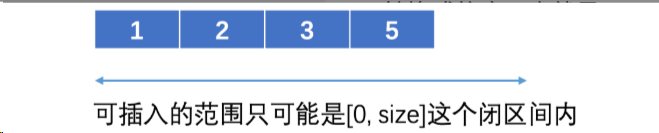
判断数据合法性 此时正常插入便能成功进行,但如果我们在非法位置插入元素依旧会有问题,比如这个位置小于0或者大于现在的元素数量,故我们应当检查插入位置是否合法 转换成位序,也就是[1, size + 1]这个闭区间,所以我们在一开始的时候进行判断: 1 2 3 4 5 6 7 8 9 _Bool insertList (ArrayList list , E element, int index) { if (index < 1 || index > list ->size + 1 ) return 0 ; for (int i = list ->size; i > index - 1 ; i--) list ->array [i] = list ->array [i - 1 ]; list ->array [index - 1 ] = element; list ->size++; return 1 ; }
扩容线性表 刚才只是说明了扩容的方法,现在我们来实现一下,判断size是否等于capacity,如果等于,则需要扩容。 1 2 3 4 5 6 7 8 9 10 11 12 13 14 15 16 17 18 19 20 _Bool insertList (ArrayList list , E element, int index) { if (index < 1 || index > list ->size + 1 ) return 0 ; if (list ->size == list ->capacity) { int newCapacity = list ->capacity + (list ->capacity >> 1 ); E * newArray = realloc (list ->array , sizeof (E) * newCapacity); if (newArray == NULL ) return 0 ; list ->array = newArray; list ->capacity = newCapacity; } for (int i = list ->size; i > index - 1 ; i--) list ->array [i] = list ->array [i - 1 ]; list ->array [index - 1 ] = element; list ->size++; return 1 ; }
relloc函数 函数原型:void* relloc(void* memblock, size_t size)
relloc函数返回的是void*类型的指针,指向新开辟的内存块的起始地址。 memblock是需要扩容的内存块指针,如果原本的内存块之后又足够的空间可以追加,则直接追加,否则会开辟新的空间并返回 size是新的内存块大小,注意是新的,而不是新增加的。 如果memblock是NULL,那么就相当于malloc函数,申请一个新的内存块。 如果size是0,那么就相当于free函数,释放掉memblock指向的内存块。 删除元素 删除操作与插入操作类似,当删除元素时,需要对元素进行批量移动,但是不需要考虑扩容问题了。
1 2 3 void deleteList (ArrayList list , int index) {}
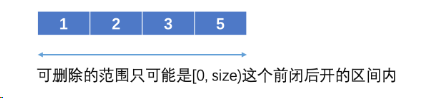
1 2 3 4 5 6 7 8 9 10 11 _Bool deleteList (ArrayList list , int index) { if (index < 1 || index > list ->size) return 0 ; for (int i = index - 1 ; i < list ->size - 1 ; ++i) list ->array [i] = list ->array [i + 1 ]; list ->size--; return 1 ; }
获取长度 获取顺序表长度的操作非常简单,只需要返回当前Size即可
1 2 3 int sizeList (ArrayList list ) { return list ->size; }
查找元素 查找元素在线性表中,需要遍历线性表,当出现目标元素时,返回该元素的索引,否则返回-1
1 2 3 4 5 6 int findList (ArrayList list , E element) { for (int i = 0 ; i < list ->size; ++i) { if (list ->array [i] == element) return i + 1 ; } return -1 ; }
1 2 3 4 5 6 E * getList (ArrayList list , int index) { if (index < 1 || index > list ->size) return NULL ; return &list ->array [index - 1 ]; }
顺序表完整代码 1 2 3 4 5 6 7 8 9 10 11 12 13 14 _Bool initList (ArrayList list ) ;_Bool insertList (ArrayList list , E element, int index) _Bool deleteList (ArrayList list , int index) int sizeList (ArrayList list ) E * getList (ArrayList list , int index) int findList (ArrayList list , E element) void printList (ArrayList list )
1 2 3 4 5 6 7 8 9 10 11 12 13 14 15 16 17 18 19 20 21 22 23 24 25 26 27 28 29 30 31 32 33 34 35 36 37 38 39 40 41 42 43 44 45 46 47 48 49 50 51 52 53 54 55 56 57 58 59 60 61 62 63 64 65 66 67 68 69 70 71 72 73 74 75 76 77 78 79 80 81 82 83 84 85 86 87 88 89 90 91 92 93 94 95 96 97 98 99 100 101 102 103 104 105 106 107 108 109 110 111 #include <stdio.h> #include <stdlib.h> typedef int E;struct List { E * array ; int capacity; int size; }; typedef struct List * ArrayList ;_Bool initList (ArrayList list ) { list ->array = malloc (sizeof (E) * 10 ); if (list ->array == NULL ) return 0 ; list ->capacity = 10 ; list ->size = 0 ; return 1 ; } _Bool insertList (ArrayList list , E element, int index) { if (index < 1 || index > list ->size + 1 ) return 0 ; if (list ->size == list ->capacity) { int newCapacity = list ->capacity + (list ->capacity >> 1 ); E * newArray = realloc (list ->array , newCapacity * sizeof (E)); if (newArray == NULL ) return 0 ; list ->array = newArray; list ->capacity = newCapacity; } for (int i = list ->size; i > index - 1 ; --i) list ->array [i] = list ->array [i - 1 ]; list ->array [index - 1 ] = element; list ->size++; return 1 ; } _Bool deleteList (ArrayList list , int index) { if (index < 1 || index > list ->size) return 0 ; for (int i = index - 1 ; i < list ->size - 1 ; ++i) list ->array [i] = list ->array [i + 1 ]; list ->size--; return 1 ; } int sizeList (ArrayList list ) { return list ->size; } E * getList (ArrayList list , int index) { if (index < 1 || index > list ->size) return NULL ; return list ->array [index - 1 ]; } int findList (ArrayList list , E element) { for (int i = 0 ; i < list ->size; ++i) { if (list ->array [i] == element) return i + 1 ; } return -1 ; } void printList (ArrayList list ) { for (int i = 0 ; i < list ->size; ++i) printf ("%d " , list ->array [i]); printf ("\n" ); } int main () { struct List list ; ArrayList arraylist =&list ; if (initList(arraylist)){ insertList(arraylist, 666 , 1 ); printList(arraylist); insertList(arraylist, 777 , 1 ); printList(arraylist); insertList(arraylist, 888 , 2 ); printList(arraylist); if (deleteList(arraylist,1 )) printList(arraylist); else printf ("删除失败,未找到该元素" ); if (deleteList(arraylist,2 )) printList(arraylist); else printf ("删除失败,未找到该元素" ); printf ("%d\n" ,sizeList(arraylist)); int i=1 ; printf ("第%d个元素的位置为%d\n" ,i,getList(arraylist,i)); printf ("666的下标为:%d\n" ,findList(arraylist,666 )); printf ("888的下标为:%d\n" ,findList(arraylist,888 )); } else { printf ("顺序表初始化失败,无法启动程序!" ); } }
1 2 3 4 5 6 7 8 9 666 777 666 777 888 666 888 666 888 1 第1 个元素的位置为888 666 的下标为:-1 888 的下标为:1
在使用printf时要严格格式化字符串,我在使用时因太长时间未用C语言,直接使用了printf(arraylist->size)导致一直报错而不知道原因是什么,此处是因为传过去的值,系统会将其当做地址使用,结果就是乱掉甚至崩溃,应当写成printf("%d",arraylist->size)
问题: 请问顺序实现的线性表,插入、删除、获取元素操作的时间复杂度为?
插入: 因为要将后续所有元素都向后移动,所以平均时间复杂度为 O(n)删除: 同上,因为要将所有元素向前移动,所以平均时间复杂度为 O(n)获取元素: 因为可以利用数组特性直接通过下标访问到对应元素,所以时间复杂度为 O(1)单链表 初始化链表 1 2 3 4 5 6 7 8 typedef int E; struct ListNode { E element; struct ListNode * next ; }; typedef struct ListNode * Node ;
完成链表的初始化1 2 3 4 5 6 7 8 9 10 void initList (Node head) { head->next = NULL ; } int main () { struct Node head ; initList(head); }
链表的插入和删除 按照以下步骤进行插入首先先将要插入的节点的后继节点指向原本这个位置的节点 然后将插入位置的前驱结点的后继结点指向改为要插入的节点 1 2 3 4 5 6 void insertList (Node head, E element, int index) { }
1 2 3 4 5 6 7 8 9 10 11 _Bool insertList (Node head, E element, int index) { if (index < 1 ) return 0 ; while (--index) { head = head->next; if (head == NULL ) return 0 ; } return 1 ; }
在循环操作完成后,如果没问题就能找到对应插入位置的前驱结点,我们只需要按照上面分析的操作来编写代码即可: 1 2 3 4 5 6 7 8 9 10 11 12 13 14 15 _Bool insertList (Node head, E element, int index) { if (index < 1 ) return 0 ; while (--index) { head = head->next; if (head == NULL ) return 0 ; } Node node = malloc (sizeof (struct ListNode)); if (node == NULL ) return 0 ; node->element = element; node->next = head->next; head->next = node; return 1 ; }
这样便完成了链表的插入操作,删除操作同理,这里直接给出删除的完整代码 1 2 3 4 5 6 7 8 9 10 11 12 _Bool deleteList (Node head, int index) { if (index < 0 ) return 0 ; while (index--) { head = head->next; if (head == NULL ) return 0 ; } if (head->next == NULL ) return 0 ; Node tmp = head->next; head->next = head->next->next; free (tmp); return 1 ; }
其他函数 1 2 3 4 5 6 7 8 9 10 11 12 int findList (Node head, E element) { head = head->next; int i = 1 ; while (head) { if (head->element == element) return i; head = head->next; i++; } return -1 ; }
查找链表长度其实就是遍历一遍,计数器挨个加1,最后返回计数器的值 1 2 3 4 5 6 7 8 int sizeList (Node head) { int i = 0 ; while (head->next) { head = head->next; i++; } return i; }
链表完整代码 1 2 3 4 5 6 7 8 9 10 11 12 13 14 15 16 17 18 19 initList(Node): void insertList(Node, E, int ): _Bool deleteList(Node, int ): _Bool findList(Node, E): int sizeList(Node): int getList(Node, int ): E randomInsertHead(Node, int ): void randomInsertTail(Node, int ): void PrintNode(Node): void
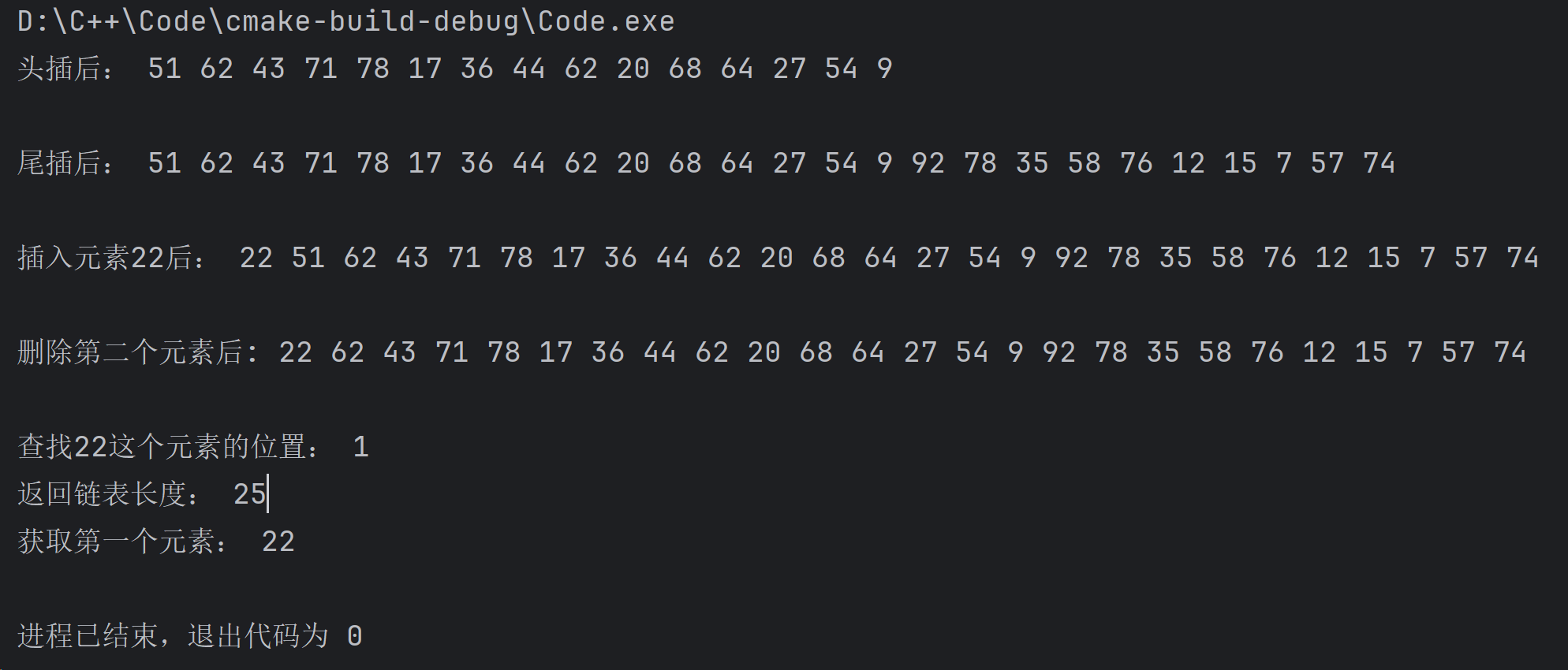
1 2 3 4 5 6 7 8 9 10 11 12 13 14 15 16 17 18 19 20 21 22 23 24 25 26 27 28 29 30 31 32 33 34 35 36 37 38 39 40 41 42 43 44 45 46 47 48 49 50 51 52 53 54 55 56 57 58 59 60 61 62 63 64 65 66 67 68 69 70 71 72 73 74 75 76 77 78 79 80 81 82 83 84 85 86 87 88 89 90 91 92 93 94 95 96 97 98 99 100 101 102 103 104 105 106 107 108 109 110 111 112 113 114 115 116 117 118 119 120 121 122 123 124 125 126 127 128 129 130 131 132 133 134 135 136 137 138 139 140 141 142 143 144 145 146 147 148 149 150 151 152 153 154 #include <stdio.h> #include <stdlib.h> #include <time.h> typedef int E;struct ListNode { E element; struct ListNode * next ; }; typedef struct ListNode * Node ;void initList (Node node) { node->next = NULL ; } _Bool insertList (Node head, E element, int index) { if (index < 1 ) return 0 ; while (--index) { head = head->next; if (head == NULL ) return 0 ; } Node node = malloc (sizeof (struct ListNode)); if (node == NULL ) return 0 ; node->element = element; node->next = head->next; head->next = node; return 1 ; } _Bool deleteList (Node head, int index) { if (index < 1 ) return 0 ; while (--index) { head = head->next; if (head == NULL ) return 0 ; } if (head->next == NULL ) return 0 ; Node tmp = head->next; head->next = head->next->next; free (tmp); return 1 ; } E getList (Node head, int index) { if (index < 1 ) return 0 ; do { head = head->next; if (head == NULL ) return 0 ; } while (--index); return head->element; } int findList (Node head, E element) { head = head->next; int i = 1 ; while (head) { if (head->element == element) return i; head = head->next; i++; } return -1 ; } int sizeList (Node head) { int i = -1 ; while (head) { head = head->next; i++; } return i; } void randomInsertHead (Node head,int n) { Node tempNode; for (int i=0 ;i<n;i++){ tempNode=(Node)malloc (sizeof (struct ListNode)); tempNode->element=rand()%100 +1 ; tempNode->next=head->next; head->next=tempNode; } } void randomInsertTail (Node node,int n) { Node tempNode; Node tail; if (node==NULL ) tail=node; while (node){ if (node->next==NULL ) tail=node; node=node->next; } for (int i=0 ;i<n;i++){ tempNode=(Node)malloc (sizeof (struct ListNode)); tempNode->element=rand()%100 +1 ; tail->next=tempNode; tail=tempNode; } } void PrintNode (Node node) { Node p = node->next; while (p != NULL ){ printf ("%d " , p->element); p = p->next; } printf ("\n" ); } int main () { srand(time(0 )); Node head =(Node)malloc (sizeof (struct ListNode)); initList(head); printf ("头插后: " ); randomInsertHead(head,15 ); PrintNode(head); printf ("\n" ); printf ("尾插后: " ); randomInsertTail(head,10 ); PrintNode(head); printf ("\n" ); printf ("插入元素22后: " ); insertList(head,22 ,1 ); PrintNode(head); printf ("\n" ); printf ("删除第二个元素后: " ); deleteList(head,2 ); PrintNode(head); printf ("\n" ); printf ("查找22这个元素的位置: %d" ,findList(head,22 )); printf ("\n" ); printf ("返回链表长度: %d" ,sizeList(head)); printf ("\n" ); printf ("获取第一个元素: %d" , getList(head,1 )); printf ("\n" ); }
最开始我遇到的错误 为链表开辟内存部分,我直接使用了Node head =(Node)malloc(sizeof(Node)),Node是指针,所占大小是固定8个字节,所以这里应该使用Node head =(Node)malloc(sizeof(struct ListNode)) 期初我将随机数种子放到了随机数值的函数中,但这样导致了如果两次调用间隔小于 1 秒,会导致随机数种子相同,生成完全相同的随机数序列,所以我将随机数种子放到了主函数中 问题: 请问链式实现的线性表,插入、删除、获取元素操作的时间复杂度为?
插入: 因为要寻找对应位置的前驱结点,所以平均时间复杂度为O(n)O (n ),但是不需要做任何的移动操作,效率肯定是比顺序表要高的。删除: 同上,所以平均时间复杂度为O(n)O (n )获取元素: 由于必须要挨个向后寻找,才能找到对应的结点,所以时间复杂度为O(n)O (n ),不支持随机访问,只能顺序访问,比顺序表慢。链表在随机访问元素时,需要通过遍历来完成,而顺序表则利用数组的特性直接访问得到所以读取数据多于插入或是删除数据的情况下时,使用顺序表会更好。 顺序表在插入元素时就显得有些鸡肋了,因为需要移动后续元素,整个移动操作会浪费时间,而链表则不需要,只需要修改结点 指向即可完成插入 双向链表和循环链表 双向链表 在单链表中,可以不像顺序表那样,一次申请一段连续空间,而且在插入和删除速度上也更快,但是当我们想要操作某一个结点,比如删除或是插入,那么由于单链表的性质,我们只能先去找到它的前驱结点,才能进行。 为了解决这个问题,我们让单链表不仅保存后续结点的指针,同时保存他的前驱结点的指针 首先变更一下单链表的结构体和初始化方法1 2 3 4 5 6 7 8 9 typedef int E;struct ListNode { E element; struct ListNode * next ; struct ListNode * prev ; }; typedef struct ListNode * Node ;
1 2 3 void initNode (Node node) { node->next = node->prev = NULL ; }
双向链表的插入和删除操作 双向链表的插入操作,是在单链表的插入基础上,还需要连接和修改结点的前驱指针 插入操作的步骤:先将准备插入的结点的前驱指针和后驱指针置为NULL 将新节点的前驱指针指向插入位置的前一个结点 将新节点的后驱指针指向插入位置的结点 将插入位置的前一个结点的后驱指针指向新节点 将插入位置的结点的前驱指针指向新节点 1 2 3 4 5 6 7 8 9 10 11 12 13 14 15 16 17 18 19 20 21 22 23 24 25 26 27 28 29 30 _Bool insertDoubleList (List head,E e,int pos) { if (pos<1 ) return 0 ; while (--pos){ head=head->next; if (head==NULL ) return 0 ; } List doubleList =malloc (sizeof (struct DoubleList)); if (doubleList==NULL ) return 0 ; doubleList->element=e; if (head->next){ doubleList->next=head->next; doubleList->pre=head; head->next->pre=doubleList; head->next=doubleList; } else { doubleList->pre=head; doubleList->next=NULL ; head->next=doubleList; } return 1 ; }
删除操作相比插入操作更加简单,只需要遍历到删除的位置的前一个结点,让前一个结点与删除的后一个节点相连,最后再释放掉要删除的结点即可
1 2 3 4 5 6 7 8 9 10 11 12 13 14 15 16 17 18 19 20 21 22 23 _Bool deleteList (List list ,int pos) { while (--pos){ list =list ->next; if (list ==NULL ) return 0 ; } if (!list ->next) return 0 ; List temp=list ->next; if (list ->next->next){ list ->next->next->pre=list ; list ->next=list ->next->next; } else { list ->next=NULL ; } free (temp); }
其他操作类似,在此不过多赘述
完整实现 1 2 3 4 5 6 7 8 initDoubleList(List):void insertDoubleList (List,E,int ) :bool deleteList (List,int ) :bool printList (List) :void randomInsertHead (List,int ) :bool findList (List,E) :int sizeList (List) :int getListElement (List,int ) :int
1 2 3 4 5 6 7 8 9 10 11 12 13 14 15 16 17 18 19 20 21 22 23 24 25 26 27 28 29 30 31 32 33 34 35 36 37 38 39 40 41 42 43 44 45 46 47 48 49 50 51 52 53 54 55 56 57 58 59 60 61 62 63 64 65 66 67 68 69 70 71 72 73 74 75 76 77 78 79 80 81 82 83 84 85 86 87 88 89 90 91 92 93 94 95 96 97 98 99 100 101 102 103 104 105 106 107 108 109 110 111 112 113 114 115 116 117 118 119 120 121 122 123 124 125 126 127 128 129 130 131 132 133 134 135 136 137 138 139 140 141 142 143 144 145 146 147 148 149 150 151 152 153 154 155 156 157 #include <stdio.h> #include <stdlib.h> #include <time.h> typedef int E;struct DoubleList { E element; struct DoubleList * pre ; struct DoubleList * next ; }; typedef struct DoubleList * List ;void initDoubleList (List list ) { list ->pre=NULL ; list ->next=NULL ; } _Bool insertDoubleList (List head,E e,int pos) { if (pos<1 ) return 0 ; while (--pos){ head=head->next; if (head==NULL ) return 0 ; } List doubleList =(List)malloc (sizeof (struct DoubleList)); if (doubleList==NULL ) return 0 ; doubleList->element=e; if (head->next){ doubleList->next=head->next; doubleList->pre=head; head->next->pre=doubleList; head->next=doubleList; } else { doubleList->pre=head; doubleList->next=NULL ; head->next=doubleList; } return 1 ; } _Bool deleteList (List list ,int pos) { while (--pos){ list =list ->next; if (list ==NULL ) return 0 ; } if (!list ->next) return 0 ; List temp=list ->next; if (list ->next->next){ list ->next->next->pre=list ; list ->next=list ->next->next; } else { list ->next=NULL ; } free (temp); } void printList (List list ) { list =list ->next; if (list ==NULL ) return ; while (list !=NULL ){ printf ("%d " ,list ->element); list =list ->next; } printf ("\n" ); } _Bool randomInsertHead (List doubleList,int n) { List tempList; for (int i=0 ;i<n;i++){ tempList=(List)malloc (sizeof (struct DoubleList)); if (tempList==NULL ) return 0 ; tempList->element=rand()%100 +1 ; if (doubleList->next){ tempList->next=doubleList->next; tempList->pre=doubleList; doubleList->next->pre=tempList; doubleList->next=tempList; } else { tempList->next=doubleList->next; tempList->pre=doubleList; doubleList->next=tempList; } } return 1 ; } int findList (List list ,E e) { if (list ==NULL ) return -1 ; int count=0 ; list =list ->next; while (list ){ count++; if (list ->element==e) return count; list =list ->next; } return -1 ; } int sizeList (List list ) { list =list ->next; int count=0 ; while (list ){ count++; list =list ->next; } return count; } int getListElement (List list ,int index) { for (int i=0 ;i<index;i++){ list =list ->next; } return list ->element; } int main () { srand(time(0 )); List list ; list =(List)malloc (sizeof (struct DoubleList)); initDoubleList(list ); randomInsertHead(list ,10 ); printf ("随机生成长度为10的链表:\n" ); printList(list ); insertDoubleList(list ,10 ,2 ); printf ("添加元素10后:\n" ); printList(list ); deleteList(list ,1 ); printf ("删除第一个元素后:\n" ); printList(list ); int find = findList(list ,10 ); printf ("10位于链表第%d位\n" ,find); int size =sizeList(list ); printf ("该链表的长度为:%d\n" ,size); int elem=getListElement(list ,1 ); printf ("链表第一位元素为:%d\n" ,elem); }
1 2 3 4 5 6 7 8 随机生成长度为10 的链表: 73 19 59 65 16 47 85 59 50 51 添加元素10 后: 73 10 19 59 65 16 47 85 59 50 51 10 19 59 65 16 47 85 59 50 51 10 位于链表第1 位该链表的长度为:10 链表第一位元素为:10
循环链表 循环链表,这种链表实际上和前面的链表是一样的,只是它的最后一个结点,是与头结点相连的,双向链表和单向链表都可以做成这样的环形结构